His copays encompass physical therapy gos to, where he'll pay $20 for each session. Leon's identified to get everything back on track so he and Leah can return to doing the important things they like: costs time together outdoors. By finding out how premiums, deductibles, coinsurance and copays work, you can much better comprehend your health care expenses.
Simply put, a deductible is the amount of cash that you have to pay by yourself behalf before your plan will begin and begin to cover qualified medical expenses. The main benefit of a deductible is that you will conserve cash on your premium. So the larger the deductible, the greater the discount rate on your premium.
Other methods to save money on your premiums include co-insurance, which is another alternative available on our MyHEALTH strategies in Asia. The easiest way to illustrate how deductibles work would be through some easy examples. If person A has a deductible of $500 and needed treatment equalling $4,000, then their insurance coverage would cover $3,500 after person A met their deductible.
10 Easy Facts About How To Shop For Health Insurance Explained
Individual B has a deductible of $2,000 and needs treatment equalling $1,000. However, later that year they require another treatment costing $5,000. In this case, person B would cover the $,1000 for the very first treatment and $1,000 of the second, while the insurance would cover $4,000 of the second claim.
So it's always crucial to inspect both the schedule of advantages and the terms and conditions of the plan to make certain you totally understand how deductibles and any other premium conserving system work prior to you buy. Below are some methods deductibles might differ across plans. Sometimes, they may apply to your strategy as a whole, but in other cases deductibles just apply to specific benefits.
Usually, medical insurance deductibles are used on a per term basis, or per period of insurance coverage. This implies that once you have actually satisfied your deductible, all eligible expenses during the rest of that period of insurance will be covered, but that your deductible will reset at the beginning of the next duration of insurance coverage, assuming you have restored your policy.
What Does How Do Life Insurance Companies Make Money Mean?
Frequently times, individuals secure our MyHEALTH plans as a way to top up or the coverage supplied by an existing health insurance policy they may have through their work or their spouse. This is to help cover qualified medical expenses that the existing health strategy would not have actually covered.
Not only will it assist decrease your premium, however you can use qualified costs covered by your existing insurance coverage towards the deductible on your MyHEALTH strategy, even if it is completely covered by the existing policy. A lot of medical insurance plans will offer a series of deductibles to match various individuals's financial and coverage requirements.
For instance, our MyHEALTH plans offer international protection, but are customized for people residing in different countries to better suit their day-to-day healthcare requirements. how many americans don't have health insurance. Therefore, various plans provide different deductible levels based upon the local insurance coverage market and healthcare system. MyHEALTH Hong Kong MyHEALTH Singapore MyHEALTH Thailand MyHEALTH Vietnam MyHEALTH Philippines NilUSD 1,500 USD 5,000 USD 10,000 NilSGD 2,000 SGD 5,00010,000 NilTHB 16,375 THB 32,750 THB 81,875 THB 163,750 THB 327,500 NilUSD 500USD 1,000 USD 2,500 USD 5,000 USD 10,000 NilUSD 500USD 1,000 USD 2,500 USD 5,000 USD 10,000 Trying to find comprehensive global health insurance protection in Asia? APRIL International offers a series of strategies that offer global coverage to individuals living in Asia, supplying flexible coverage to expats and regional nationals alike.
Top Guidelines Of What Is The Fine For Not Having Health Insurance
We likewise offer group medical insurance prepare for companies of every size, from SMEs to large multinationals. You can click the links listed below for more details on your options.
Getting medical treatment can be costly due to the fact that, wellhealth insurance. Those bills can escalate in a brief amount of time if you need health care, depending on what your insurance coverage will and will not cover. However what about medical insurance deductibles? How precisely do they work? And how can you make them work much better for you and your household? We'll direct you through the world of health insurance deductibles, describe the different types, and describe what makes one of the most sense when it pertains to deductibles and medical insurance.
A medical insurance deductible is the quantity you are accountable for paying before your medical insurance service provider starts to Get more info share some of the expense of medical treatment with you. Medical insurance, like any other kind of insurance, comes with a monthly or annual premium the amount you regularly pay to be insured in the very first place.
A Biased View of What Is A Premium In Insurance
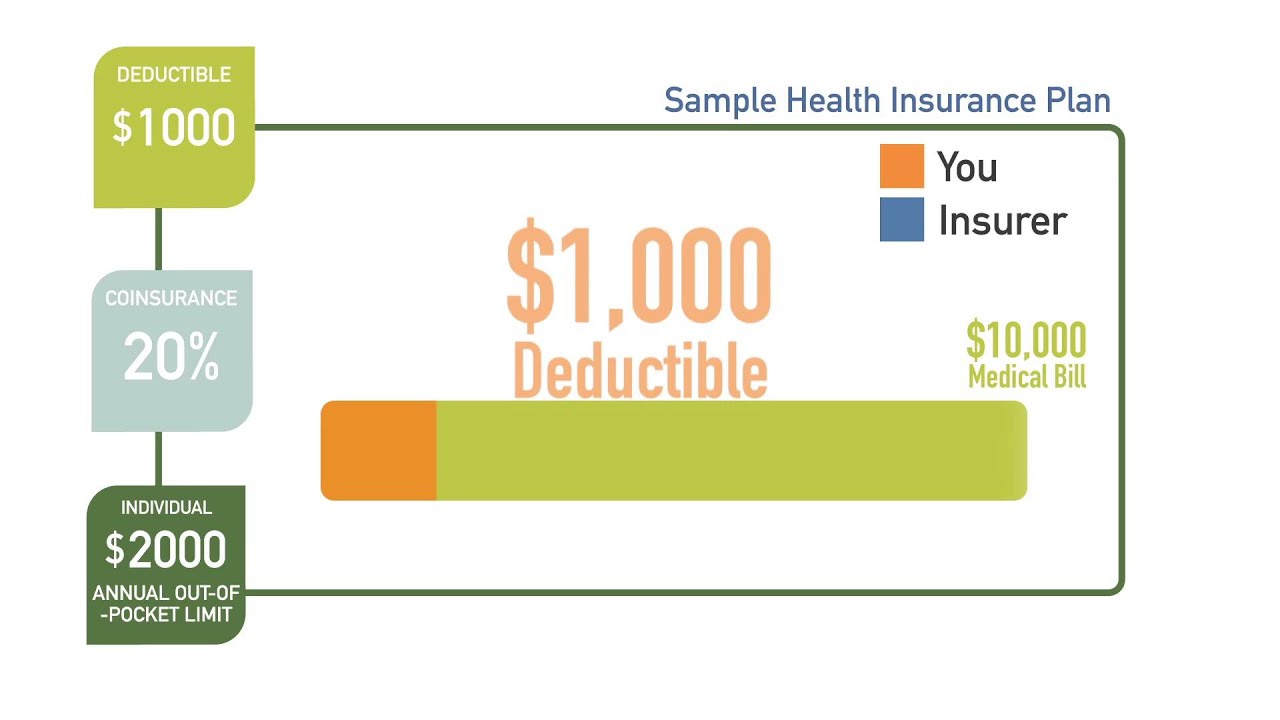
And that deductible is in effect for the entire year till it's time to restore or enroll again. You specify your deductible quantity when you enroll in your medical insurance strategy during the enrollment duration. Let's pretend you have a medical insurance strategy with a $1,000 deductible. If you have an accident or establish an illness and require medical treatment, you'll have to pay for the very first $1,000 in medical expenses.
It's good to bear in mind that with most insurance plans, you're able to get specific routine and preventative health care services (like screenings or immunizations) as standardregardless of whether or not you've satisfied your deductible. is the term utilized to describe how your medical treatment is paid after you've reached your deductible amount.
Just how much do I pay in coinsurance? It's a portion amount depending on your insurance plan. If you've fulfilled your deductible and your coinsurance obligation is 30%, that implies your health insurance coverage company will pay 70% of each future expense until you satisfy your out-of-pocket optimum for the year.2 See more below.
Getting The How To Become An Insurance Broker To Work
It's a set amount decided by your specific health insurance coverage strategy. Copays are various than deductibles and coinsurance since you pay a copay whether or not you have actually met your deductible. A copay for a standard journey to your medical professional can be different than a copay for specialized services like physiotherapy, for instance.
An out-of-pocket optimum is the maximum amount your medical insurance strategy states you need to pay forcovered health services throughout the year. This figure originates from your deductible, your coinsurance responsibility and your copays. If you reach this out-of-pocket maximum, then your insurer pays 100% of your staying covered medical costs for that year.
Deductibles can come in different types depending upon the kind of insurance strategy you have! Here are the various kinds of health insurance coverage deductibles: Comprehensive deductibleA thorough deductible is a deductible amount that uses to and consists of all of the medical protections in your health insurance coverage plan. As soon as you have actually met this comprehensive deductible, your strategy's coinsurance will take impact.
The 9-Minute Rule for How Much Does An Mri Cost Without Insurance
Your plan might supply some health services without you needing to eat into your deductible. Woo-hoo! Once again, inspect to see if the protections without a deductible are helpful to you. Individual or household deductibles: Your member of the family may have specific deductibles, or the strategy might just have one household deductible. Remember, thanks to the Affordable Care Act, specific preventive care is 100% covered by all non-grandfathered health insurance. You don't have to pay any deductible, copay, or coinsurance for covered preventive healthcare services you get from an in-network provider. When you fulfill your out-of-pocket optimum for the year (including your deductible, coinsurance, and copayments), your insurer pays 100% of your staying medically-necessary, in-network expenditures, assuming you continue to follow the health prepares rules regarding previous permissions and referrals.
Your out-of-pocket costs for health care services that aren't a covered benefit of your medical insurance won't be credited towards your health insurance coverage deductible. For instance, if your health insurance doesn't cover cosmetic treatments for facial wrinkles, the cash you pay of your own pocket for these treatments won't count toward your medical insurance deductible.
There are exceptions to this guideline, such as emergency care or situations where there is no in-network service provider efficient in providing the required service. Federal rules require insurers to count the expense of out-of-network emergency situation care towards the client's regular in-network cost-sharing More helpful hints requirements (deductible and out-of-pocket optimum) and prohibit the insurance provider from imposing greater cost-sharing for these services.
When Does Car Insurance Go Down Can Be Fun For Everyone
( That's assuming the state law applies to the individual's medical insurance; self-insured plans are not regulated at the state level, and they account for most of employer-sponsored coverage.) Health prepares that allow out-of-network care, generally PPOs and POS strategies, may differ as to how they credit money you paid for out-of-network care.
In this case, money paid for out-of-network care gets credited toward the out-of-network deductible, but doesn't count toward the in-network deductible unless it's an emergency situation. One caveat: if your out-of-network provider charges more than the traditional amount for the service you received, your health insurance may limit the quantity it credits toward your out-of-network deductible to the popular amount.
Copayments usually do not count toward the deductible. If your health strategy has a $20 copay for a primary care office visit, the $20 that you pay will most likely not count towards your deductible. Nevertheless, it will count towards your maximum out-of-pocket on nearly all strategies (some grandmothered and grandfathered strategies can have different rules in terms of how their optimum out-of-pocket limitations work).
The Greatest Guide To How Long Can You Stay On Parents Insurance
In reality, premiums aren't credited toward any type of cost-sharing. Premiums are the expense of buying the insurance. They're the rate you pay the insurer for assuming part of the financial risk of your possible health care costs. You have to pay the premium monthly, no matter whether you need health services that month or not.
For a growing variety of Americans, high deductible health insurance are a fact of life. The trend began a years back and reveals no indications of disappearing. At numerous firms, it's the sole medical insurance that's offered for workers. The presumption is that if employees need to hand over more money when seeing a physician or filling a prescription, they will have "skin in the game" so they'll https://articlescad.com/examine-this-report-on-how-to-find-out-if-someone-has-life-insurance-965947.html utilize their health care benefits more selectively and prevent inefficient or unneeded treatments and drugs.
Field who is likewise a speaker at Wharton. Wharton healthcare management professor David Asch offers the example of heading out to supper on your own penny versus an expense account. You'll naturally be more prudent, says Asch, who is also executive director of Penn Medication's Center for Healthcare Innovation.
Not known Details About How Long Can You Stay On Parents Insurance
Moreover, high-deductible strategies improve business' bottom line by moving more costs to the staff member. The IRS currently specifies a high-deductible health insurance as one with a deductible of a minimum of $1,350 for an individual or $2,700 for a family, according to health care. gov. Field keeps in mind that numerous deductibles remain in the series of $5,000 to $6,000.
On the favorable side, individuals's month-to-month premiums are usually lower. The strategies have gotten appeal among entrepreneur. In 2014, 41% of consumers with employer-provided coverage had specific deductibles greater than $1,000, up from 22% in 2009, according to the Quarterly Journal of Economics. Additionally, the share of companies offering only high-deductible protection increased markedly from just 7% in 2012 to 24% in 2016.
Field adds, "Individuals truly resent those strategies where they feel that it appears like insurance coverage, however it truly isn't because you need to install so much of your own cash." Some significant companies have started to backpedal, including JPMorgan Chase and CVS, according to a short article last year in the Insurance coverage Journal.
The 4-Minute Rule for How Much Is A Unit Of Colonial Penn Life Insurance?
CVS, which had actually switched all of its staff members to high-deductible strategies, realised that some employees had stopped filling vital prescriptions and was reportedly re-evaluating its policies. "You would not want me to use an expensive brand-name drug for my heartburn when I could use a much less costly generic [On the other hand,] you do not want me to stop taking my insulin.
And some are examining whether their usage might help slow down America's breakneck medical spending. "With healthcare costs increasing faster than [the U.S.] GDP, reducing the development rate is a primary health policy goal," compose Leonard Davis Institute associate fellow Molly Frean and Wharton healthcare management professor Mark Pauly in a recent National Bureau of Economic Research working paper, "Does High Cost-Sharing Slow the Long-term Growth Rate of Health Costs? Proof from the States." They, too, note the widespread use of high-deductible health strategies: in 2018 the percentage of workers with a basic yearly deductibles reached 85%, and their average deductible was $1,573 for specific protection.
Gupta, Field, and Asch all believe that the concept of high-deductible health plans may hold pledge for minimizing general costs, but not considerably, a minimum of in their current kind. "I believe it's one tool, but in general it's not going to be a game-changer," Field says. Gupta concurs, adding that while research on these strategies has actually shown that people do cut down on care, "the reduction isn't large it's [only] on the order of 5% to 10%." The share of companies providing only high-deductible protection increased noticeably from simply 7% in 2012 to 24% in 2016.
Examine This Report about How To Get Insurance To Pay For Water Damage
Another concern with high-deductible plans is whether they truly lead people to make great choices about when they need a physician and when they do not. Asch says this is a major issue: The majority of people just don't have the medical proficiency to compare high-value and low-value care. "You would not desire me to utilize a pricey brand-name drug for my heartburn when I could use a much more economical generic," he states.
However high-deductible health insurance do not discriminate between those two acquiring choices." They depend on the patient to make the call, he says, and while some people can do that efficiently, many can not. To make things much more complicated, he states, the costly drugs are the ones that get advertised directly to consumers, spurring demand for them.